On the last Sunday of each month at 8 p.m. Eastern, join us for a provocative lecture and robust conversation about rhetoric’s worldmaking powers. For more information about the talk, the speaker, and how to register for a presentation, click on the relevant title below. Contact Rhetoric Unbound founder and curator Joshua Trey Barnett (barnett@psu.edu) with questions.
Seeing through the Spectacle
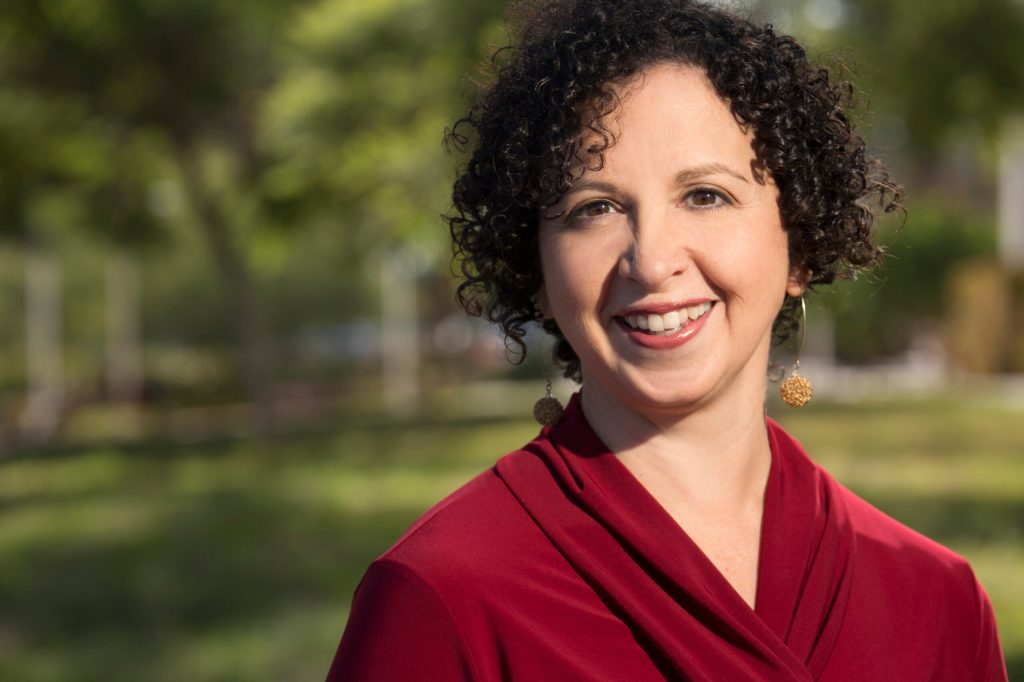
January 26, 2025: Lisa Flores, Pennsylvania State University
In this talk, I begin with the spectacle as a prevalent contemporary rhetorical form that exists as spectacle through its cultivation of spectating, a form of viewing, looking, or even witnessing premised in dehumanization. Itself an act of violence, the spectacle as a rhetorical form—a genre—does not simply dehumanize, it dehumanizes through antiBlackness. But, like all rhetorical forms, it remains vulnerable. In this talk, I ask how it is that rhetorical scholars might theorize the possibilities of that vulnerability. If the relationship between the spectacle and the act of spectating is not tautological but instead co-constitutive, how do rhetorical scholars theorize seeing through spectacle? As scholars such as Saidiya Hartman and Christina Sharpe have argued, not only is the hold of antiBlackness not complete, Black aliveness lives in various ways of seeing and knowing that refuse the premises of antiBlackness. I turn to a viral September 2021 spectacular “crisis” at the U.S./Mexico border to consider these questions.
On Panic as Inducement to Salvage
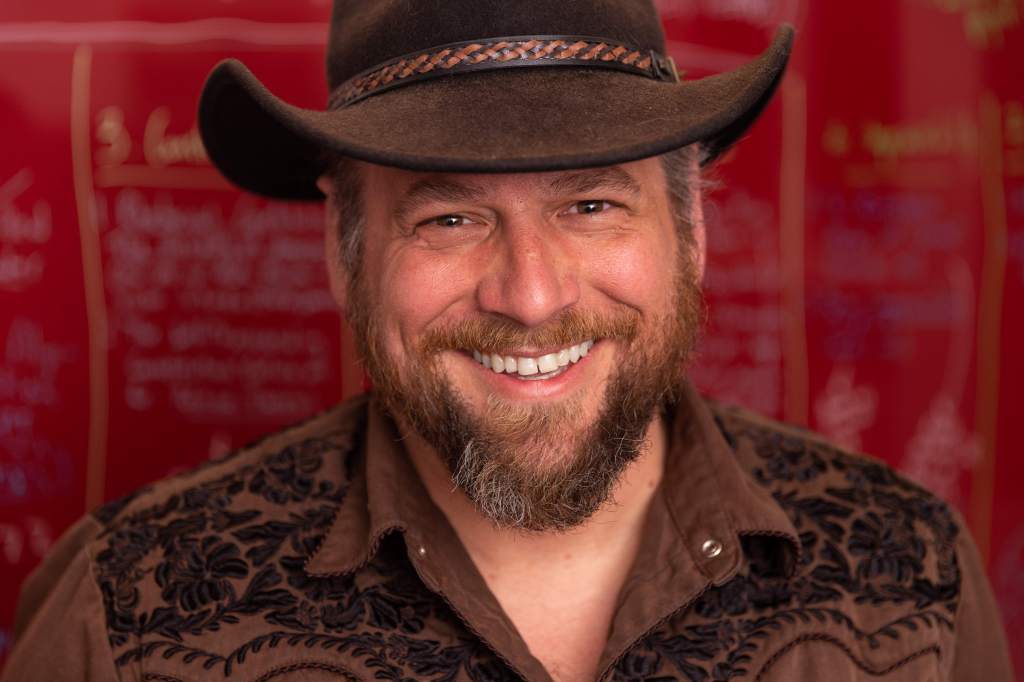
February 23, 2025: Ira Allen, Northern Arizona University
Panic is widely taken to be a bad thing. As I showed in Panic Now? Tools for Humanizing, this commonsense view sets up unhelpfully limiting ways of negotiating an affect that forms an unavoidable constraint on most near-future lives. Panic, put briefly, is that sensibility wherein we feelingly apprehend the end of a world, the end of our own world. As such, the affect is epistemically on-point. Our world, the world of a carbon-capitalism-colonialism assemblage (CaCaCo) we call modernity or, perhaps, prefer not to name at all while living as its full-time beneficiaries and part-time critics, is ending in fire, flood, pestilence, and more. With an intimation of the end of this CaCaCo world, panic does not merely disrupt our senses of a horizon, of normalcy. Equally, it asks, “And after it all, then what?” In this talk, my contention is that—relative to the polycrisis that is the ongoing unwinding and staggered collapse of our world—judicious panic offers an inducement to salvage. It orients us toward ways of metabolizing resources in our limited remaining period of hyperabundance that can leave better artifacts for future world-builders.

Sifting through Religion and Politics Again
March 30, 2025: David Charles Gore, University of Minnesota Duluth
What is the relationship between religion and politics? In a post-Hobbesian world, we tend to define religion in the subordinate position relative to politics. This has unfortunately resulted in a crisis of authority and reduced politics to nothing but sheer power. Even still, this formulation has effectively built the modern, secular nation state as we know it (although secularism was a later, and distinct development). In this lecture, I aim to complicate the modern take that politics should be in the pole position vis-à-vis religion. My aim is not to reverse the polarity of the relationship, but rather to explore what a more robust rhetoric of authority might do for us. A stronger sense of spiritual authority could possibly counteract the forces of nationalism, populism, and demagoguery. A more robust relationship between religion and politics might allow for more light and mutual support to flow between these two domains than is currently possible. In other words, there are many reasons to question the Sovereign-subordinate positionality of politics and religion given to us by Hobbes as well as the friend-foe relationship prevailing between secularism and faith. Questioning this relationship can open new possibilities for spiritual authority and might even kindle a more productive relationship between religion and politics.

“They’re Eating the Pets” as Rhetorical Strategy
April 27, 2025: Jennifer Lin LeMesurier, Colgate University
The run-up to the presidential election in 2024 was marked by increasingly chaotic rhetoric, including rumors about Haitian immigrants eating neighbors’ pets. Although unfounded, these rumors gained remarkable traction and continued to circulate as memes and shorthand for political alignment. More than just distasteful rhetoric, these rumors were also directly linked to threats of physical violence against immigrant communities. In this talk, I demonstrate how the now established genre of pet-eating rumors aims to increase inter-racial distance, manifesting anti-immigrant rhetoric in recommendations for more space between ‘native’ bodies and ‘foreign’ guts. The durability of these instances is revealing not just of an audacious rhetorical flourish but of long-seeded beliefs about identifying outsiders through their appetites. After briefly tracing some of the historical roots of these rhetorics and how they are recurrently weaponized against a range of ethnic and racial groups, I turn to a small scale incident of the killing of a Central New York village’s mascot, a swan, in order to more closely parse the undercurrents of xenophobia, whiteness-as-property, and heteronormative nostalgia that make consumptive rhetorics so persuasive to many.

Survival of the Funniest
May 25, 2025: Christopher J. Gilbert, Assumption University
There is no shortage of axioms to proclaim the peculiar power that a sense of humor has to keep us alive, let alone to live together. Humor heals. Laughter is the best medicine. Those who laugh, last. When humor goes, so goes civilization. Et cetera. The flip side, of course, is that comic sensibilities can give way to authoritarian impulses, and they have lately done so in rather unsettling ways. Still, more needs to be done around how and why it is that comedy has become such a central aspect of what might be dubbed rhetorical survival, from claims about free expression through everyday politicking to “official” statecraft. Of particular concern should be the relative festivity that encircles our habits of ridiculing perceived “enemies;” of doing cultural politics like improv theater; of trolling, doxing, and meme-making; and of being imperious about worldviews such that making fun reinforces that olden rationale for survival of the fittest. Comedy in this setup is not about schadenfreude. It is not about so-called “humor wars.” Rather, it is about the confusion of rhetorical contests as matters of life and death (both figuratively and literally) with the affordances of comic freedom. To take issue with the idea that those who survive are those who have fun or are funny—which is the purpose of this talk—is to reimagine how humorless humor and dispirited comedy constitute troubling survival tactics that are, now as ever, rooted not in freedom but rather in oppression.

Noting Hope
June 29, 2025: Jennifer Clary-Lemon, University of Waterloo
As Leslie Head says of hope in Hope and Grief in the Anthropocene, it is a practice rather than a feeling. It is not, as some maintain, a simple optimism or Pollyanna approach to solving problems. This talk turns to the emergent rhetorical practice of noting as one of hope when faced with environmental loss. Although the genre of field guide has a century-old history of documenting the natural world with the impetus to observe, discern, and educate, it is also a well-known tool of the colonial impetus to capture, threaten, and categorize (see Izaguirre). Moving away from this tradition of noting of field as a measure of the realms of science and natural history, this talk reflects on noting in new terms. A way to notice and comment on temporal specifics of loss, whether in terms of black lives (Sharpe), posthuman thinking (Tsing et al.), interspecies connection (Tan; Bradfield et al.), or temporalities of climate change (Renkl), noting—that is, combining visual image of field, observational documentation, and affective investment in a field site—is a way to come to terms with what we are losing as humans grapple with the realities of the sixth extinction. Noting offers a focus on the particulars of absence, presence, and the inconsistencies of climate realities in service of hopeful practices that allow humans to listen to nonhumans and to come to terms with loss, attachment, longing, and change.

No Kings?: Trump’s Tyrannical Rhetoric
July 27, 2025: Annie Hill, University of Texas at Austin
Unstinting in its rhetoric, the Declaration of Independence accuses King George III of “a history of repeated injuries and usurpations, all having in direct object the establishment of an absolute Tyranny over these States.” The Declaration discursively constructs the right to abolish any government that “becomes destructive” to the people’s unalienable rights of life, liberty, and the pursuit of happiness. Although tyrannical leaders–be they Kings or Presidents–claim to make people safe, the Declaration pinpoints tyranny as a mortal risk to security. Yet, in the twenty-first century, there is a clamor for the strongman leader whose appeal lies in his instability, in his no-one-knows-what-next style of insecure rule. In this paper, I argue that President Donald J. Trump’s tyrannical rhetoric persuades not only due to its contempt for Democrats, immigrants, disabled people, sexual and racial minorities, and women, to name just a few, but also due to the comfort that destabilizing claims give his supporters. Contributing to research on the material and symbolic harms unleashed by Trump, I examine how tyrannical rhetoric comforts, as well as torments, and therein lies its power to promise security while breaking the bonds of democracy.

Searching for Solidarity: Revolutionary Dreams and Radical Social Movements
August 31: Noor Ghazal Aswad, University of Alabama
This lecture investigates how revolutionary actors speak, survive, and inspire amid today’s volatile political economy of emotion—one shaped by disinformation, state violence, and global apathy toward liberation struggles. Drawing on rhetorical theory, decolonial critique, and grassroots archives, the lecture centers the voices of dissidents, poets, artists, first responders, and militants whose radical commitments challenge dominant narratives of war, trauma, and legitimacy. At the heart of this is the concept of the radical subject, whose affective force disrupts the cynicism and “negative solidarity” that often plague global publics. They are able to weave testimony, memory, and resistance into a transnational tapestry of revolutionary thought.
Based on her upcoming book Searching for Solidarity: Revolutionary Dreams and Radical Social Movements, Dr. Aswad asks, “how do we listen across difference, and how can we act ethically in solidarity with distant others?” Rather than romanticizing revolution, Searching for Solidarity offers a clear-eyed view of its contradictions—foregrounding the beauty, exhaustion, and political insight of those who continue to struggle. In doing so, solidarity is reframed as a relational and rhetorical practice: not merely a moral stance, but a transformative engagement that compels us to “partner in word and deed to change power.” In this lecture, a theoretical and emotional roadmap for building collective futures beyond empire is explored.

Ecological Infrastructures
September 28, 2025: Elizabeth Brunner, Utah State University
Western science’s roots in Eurocentric and colonial ideologies have curtailed its ability to develop effective restoration methods that respond to an animate earth by limiting what counts as data, separating human scientists from non-human collaborators, and privileging novel discovery over long-term observation. Critiques of Western science combined with efforts to integrate traditional ecological knowledge (TEK) from Indigenous Peoples have served to disrupt and expand some of the science and restoration being conducted. However, in some cases, TEK is being appropriated in a way that fails to acknowledge the relationships that underpin its effectiveness as it is introduced into U.S. scientific, capitalist, and cultural assemblages. This talk explores what I term ecological infrastructures, or the creation of human infrastructure—seemingly static systems implemented for the benefit of humans—that attempt to mimic ecologies. The juxtaposition of ecological and infrastructure helps to reveal the failures of Western/colonial science to develop interventions that respond to a living earth. I do so using the case study of beaver dam analogues, which are built by humans to mimic beaver dams.

Twisted Endings: From the Secret Report to the Deep State
October 26, 2025: Atilla Hallsby, University of Minnesota
Drawing on material excised from Sovereign, Settler, Leaker, Lie (Ohio State University Press, forthcoming 2026), this presentation argues that the secret is a dynamic and rhetorical interplay of absence and desire. Whereas the book addresses the rhetorical form of scandals, dogwhistles, national security leaks, and settler-detective narratives, this talk focuses on the connection between the Moynihan Report (1965), the Pentagon Papers (1971), the Senate Intelligence Committee Report on Torture (2014), and “the deep state.” The connection between these texts is encapsulated in two principles: (1) there is always a “beyond” to the secret, or that hidden meanings come to light through the restoration of rhetorical context, and (2) the secret is that there is no secret, or that much of what is concealed is a going-through-the-motions that repeats a similar form across many, temporally distant, instances. I critique the appropriation and dilution of appeals to transparency in contemporary political discourse, particularly in reference to conspiracy theories like the “deep state.” Such theories do not just distort public perceptions by fostering mistrust while masquerading as revelations; they underscore the necessity of discerning the secret’s form and function, a continuous thread that stretches from Daniel Patrick Moynihan to Donald Trump.
 Rhetoric Unbound